
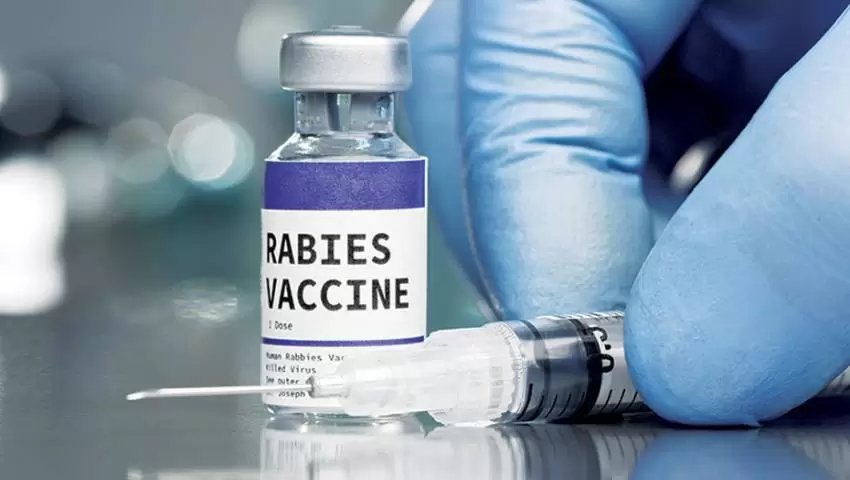
The Government Medical Officers’ Association (GMOA) has raised concerns over an alleged shortage of rabies vaccines at Medical Officer of Health (MOH) offices across the country, warning that the disruption could lead to an increase in rabies infections among animals and a rise in human fatalities.
GMOA Media Spokesman Dr. Chamil Wijesinghe said the situation threatens Sri Lanka’s target of achieving “zero human rabies deaths by 2030” under the One Health approach jointly implemented by the Health Ministry and the Department of Animal Production and Health (DAPH) as the the nationwide rabies eradication programme has come to a standstill due to the shortage of vaccines.
“Rabies vaccines are available at private vaccination centres, but there is a severe shortage at MOH offices,” Dr. Wijesinghe said. “Although rabies is entirely preventable, the current situation has become a serious public health issue.”
He said vaccination of stray dogs and other animals is essential to controlling the spread of the virus. However, due to the shortage, the stray dog vaccination programme has reportedly been halted for nearly one and a half months.
“Rabies is 100 percent fatal once symptoms appear. There is no cure, but it can be prevented through proper vaccination,” he said.
According to GMOA estimates, at least 50 human rabies infections are reported annually across the country, and health professionals fear the number of human fatalities could rise if the shortage continues.
Meanwhile, several veterinary associations and some Health Ministry officials have also raised concerns over the vaccine shortage at MOH offices, warning that the interruption of vaccination campaigns could accelerate the spread of the virus and increase the risk of human fatalities.
They alleged that the shortage was caused by inaction and poor planning by government health authorities.
Health sector representatives pointed out that Sri Lanka had reduced human rabies fatalities to 15 last year through sustained vaccination programmes. However, they warned that the current disruption could reverse years of progress and lead to an increase in deaths this year.
Official data from the national animal rabies control programme over the past seven years shows a mixed trend.
Human vaccinations increased from 894,130 in 2019 to 1,343,077 in 2025, while human deaths declined from 26 in 2019 to 13 in 2025, despite fluctuations in between.
However, animal sterilisation programmes, considered important in controlling the disease at its source, declined sharply from 56,844 in 2019 to 8,421 in 2025.
Meanwhile, distribution of human anti-rabies vaccines (ARV) increased significantly in 2025, reaching 2,225,449 doses compared to annual figures of around 160,000 to 275,000 doses in previous years.
Public health observers said the figures show that while human vaccination coverage has improved and deaths have declined, the reduction in sterilisation programmes could create long-term challenges in controlling rabies transmission.